
Trends — Culture • Lifestyle • Future
Trends — Culture • Lifestyle • Future
Dementia is one of the key public health and social challenges of our time. In 2021, an estimated 57 million people were living with dementia worldwide, with nearly 10 million new cases occurring each year. Dementia is also the seventh leading cause of death globally.
It is an umbrella term for a group of progressive conditions that affect memory, thinking, behaviour, and the ability to live independently. While dementia becomes more common with age, it is not a normal or inevitable part of ageing.
Its impact is highly individual. People living with dementia may experience difficulties with memory, language, orientation, and everyday tasks, including getting lost in familiar places or struggling with routines that were once second nature.
As familiar memories and environments become harder to navigate, people may also experience confusion, frustration, anxiety, and a loss of confidence. Yet dementia does not diminish a person’s identity, relationships, preferences, or right to live with dignity.
Designing for Familiarity and Independence
The role of the built environment becomes particularly important here. Homes, neighbourhoods, transport networks, and public spaces can either create additional barriers or support people in navigating everyday life. By placing people's needs at the centre of urban design, we can create environments that promote comfort, accessibility, and social interaction, helping individuals maintain their independence and quality of life as they age.
This approach can be seen in IMMORTAL Singapore’s award-winning Dementia-Friendly Wayfinding System at Khatib Central and Chong Pang City in Singapore. Developed with an emphasis on ageing in place, the system uses bold colours, large block numbers, familiar symbols, and strategically placed directional signage to help seniors and people living with dementia recognise and navigate their surroundings.
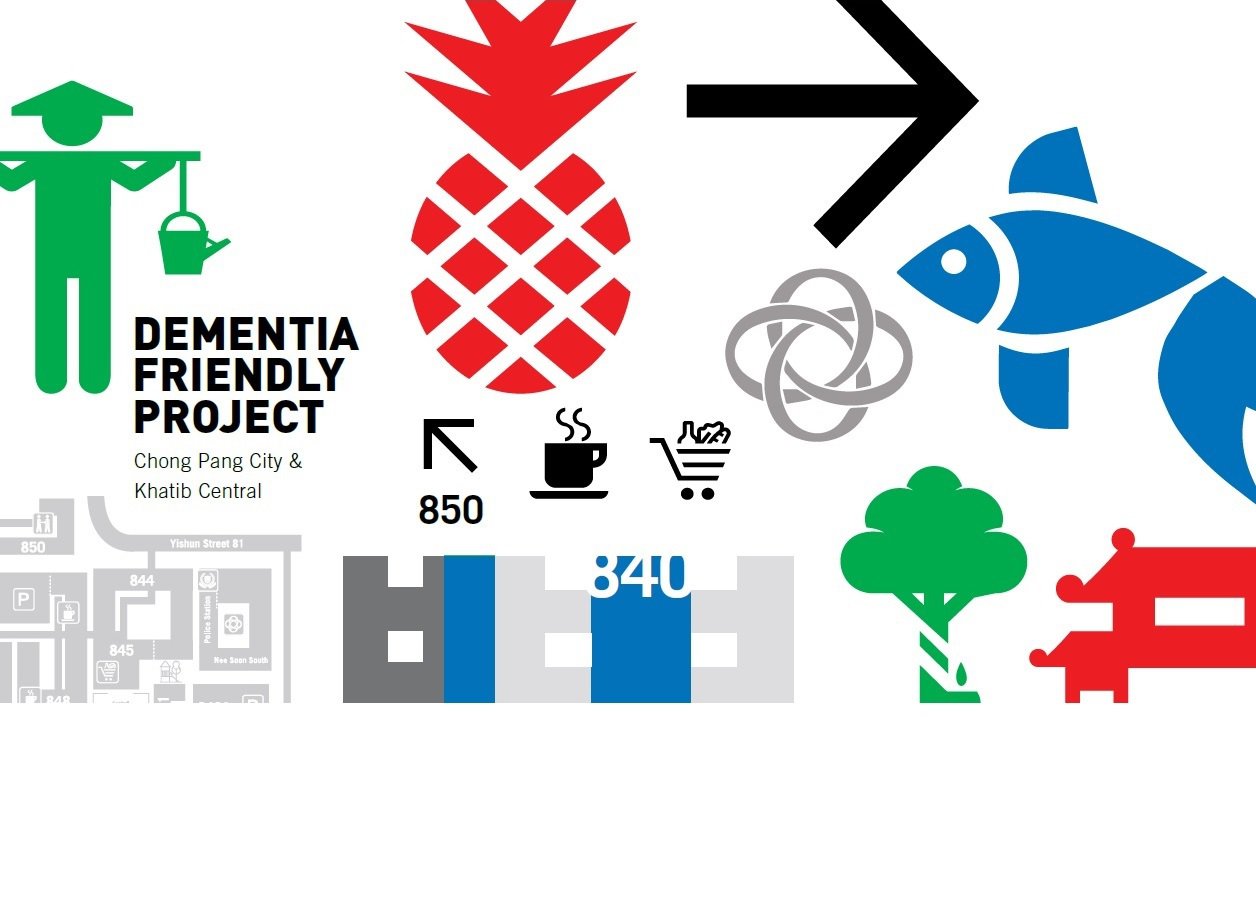
The signage is also designed for the general public and visitors, helping people locate facilities and key destinations within the neighbourhood.
The history of the area was considered as part of the process of identifying heritage-related icons, resulting in references to pineapples, tropical fish, and rubber trees, among others. These familiar visual icons create another layer of recognition, acting as visual keys that help residents and visitors identify their surroundings and navigate the neighbourhood with greater ease.
A similar approach was subsequently adopted at Ang Mo Kio Avenue 10 in Singapore, where colour-zoned residential clusters, large numerical identifiers, and familiar fruit and vegetable icons provide additional visual cues throughout the neighbourhood.
These wayfinding elements are applied consistently across key touchpoints, including block entrances, lift lobbies, and sheltered walkways, improving spatial clarity, orientation, and everyday navigation.
Together, these projects demonstrate how wayfinding can go beyond directing people from one place to another. By creating environments that are clearer, more recognisable, and easier to navigate, design can support independence, confidence, and a continued sense of connection with the places people call home.
As populations age, more people may find themselves growing older without a spouse, children, or close family members to rely on, making it increasingly important to design neighbourhoods that support independence and connection.

Designing for Connection
The impact of dementia extends beyond the individual. Family members, professional caregivers, friends and neighbours may take on responsibilities that affect their own work, wellbeing, relationships and daily lives.
Caregiving can be demanding, making it important to recognise and support the people around those living with dementia. But the challenges of dementia extend beyond caregiving and into the wider community.
Stigma and misunderstanding can contribute to social withdrawal and discrimination, while barriers within public spaces, transport and services can make it harder for people to remain engaged with their communities.
This is where the built environment can play a role. Thoughtful design can make everyday environments more accessible and intuitive, while wayfinding can provide visual and spatial cues that support recognition and orientation.
These interventions may appear simple, but they can contribute to something much larger: helping people remain active, independent and connected to their communities for longer. With a good design strategy, we can create environments that enable people living with dementia to remain connected and be treated with dignity for as long as possible.
